· Nadia Rahman
Where to put a shoulder rest in a violin case
This page is about packing, not about playing. If you came looking for where the pad should sit on your body once the violin is up, that is a different question and it lives in the posture guide. What follows is the other half of the day: the two minutes when the rest has to go somewhere and the lid has to shut.
Why the lid will not close
A shaped case is moulded to the outline of a violin and to its depth. Look inside and you can read the design: a padded well shaped like the body, a neck channel, a block at the scroll, and a recess at the tailpiece end that exists to give the chin rest somewhere to be. The maker planned around the chin rest, because almost every violin has one.
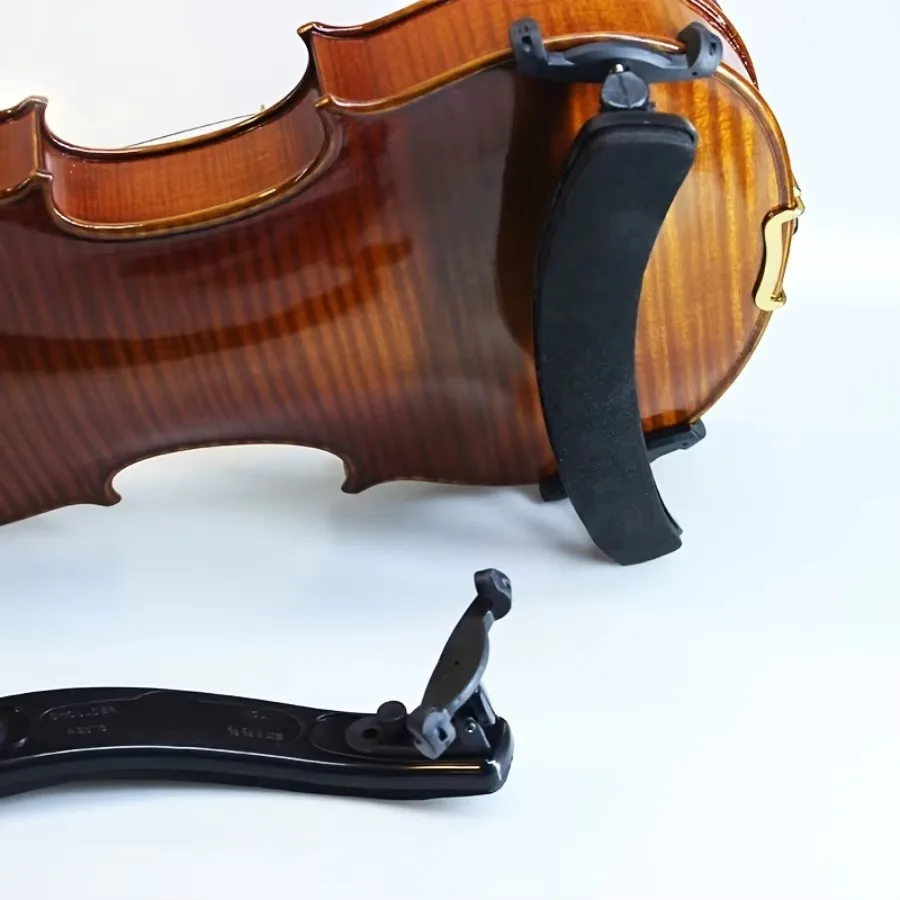
Nobody planned around the shoulder rest, and here is the awkward part: the two accessories sit on opposite faces of the same instrument. The chin rest stands proud of the belly, the shoulder rest clips to the ribs and stands proud of the back. In a shaped case the violin lies belly upward, so one takes depth above and the other takes depth below, and the lid has to close over both at once.
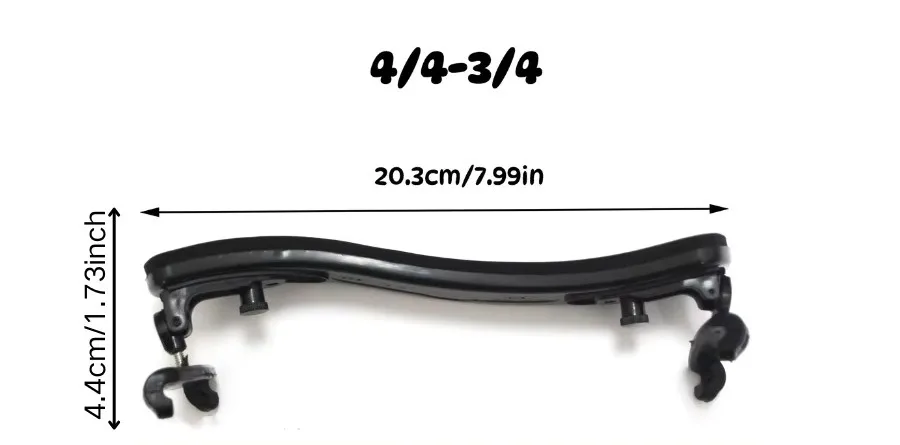
One side of that sum has a number. Our arch is a fixed 4.4 cm from the feet to the top of the pad, and the big model spans 20.3 cm. That is the block of air a fitted rest asks the case to find under the instrument, on top of the depth the body already needs.
The rule that decides the rest
A violin in its case is carried by its ribs and its neck block, with clear air over the belly. The moment an object shares that air it becomes a lever: the lid is a flat surface pressing on a curved one, and whatever sits between them concentrates the load on a small patch of thin spruce or on the bridge feet.
So the answer is never "somewhere on the violin". The rest goes beside it, and the accessory is built for that trip: the feet pivot on their thumbscrew joints and fold in against the arch, so what leaves your shoulder as a curved bar becomes a flat shape that slides into a compartment. The setup guide shows the same joints working the other way.
The three places it can go
In order of preference. Each option keeps the rest further from the arching than the one below it.
- The accessory compartment. Most cases have a lidded well beside the tailpiece, sometimes a second at the scroll end. This is where the rest belongs: walled off from the instrument, with its own lid, so nothing in it migrates onto the belly when the case is carried on its side. Lay it in flat, not on edge.
- Beside the neck and the scroll. There is usually a pocket of empty space on one or both sides of the neck channel, and a folded rest lies there comfortably. Alongside the neck, never wedged underneath it: the neck sits on its block for a reason, and lifting it throws the weight of the instrument onto the scroll and the button.
- The outer pocket of the cover. Many covers carry a zipped sheet-music pocket where a rest lies flat and never touches the instrument. The trade is that an outer pocket is exposed if the case is set down hard, so use it when the inner options are full.
Size is quietly doing work in all three. The small model spans 15.8 cm rather than 20.3 cm, and in a child's case, where every compartment is scaled down with the instrument, that difference decides whether the well shuts. Our sizes guide matches each model to the fraction.
Cases with no compartment
Plenty of student cases, especially the light foam ones bundled with a rental, have no accessory well at all: a moulded bed, a neck channel, a bow holder in the lid, and that is the whole interior. Parents write to us about this more than any other packing problem.
Work through it in this order. Check the space beside the scroll first, because it exists in almost every case even when nothing is built into it. Then the case blanket: the rest goes under it, beside the ribs, with the cloth covering both. That stops it sliding across the belly in transit, which is the real risk in an unpartitioned interior. Then the outer cover pocket.
What you should not do is leave it clipped to the violin because there is nowhere obvious, or leave it at home because packing it is a nuisance. A rest that stays behind is one that is not doing its job, and the hold reverts to the shoulder-up, chin-down squeeze it exists to prevent. That habit has a long tail.
prevalence range of playing-related musculoskeletal disorders in string players across studies
— Systematic review, Journal of Manipulative and Physiological Therapeutics, 2018
What never goes on the violin
Once the rest has a home, the same logic sorts everything else in the case. The middle column below is one answer wearing different clothes.
| Object | Why not on the instrument | Where it goes |
|---|---|---|
| Shoulder rest, still fitted | Adds depth under the back and holds the ribs against the interior | Folded, in the accessory well |
| Rosin cake | A hard corner on a thin arched plate, and it sheds dust on the varnish | Its own tin, in the well |
| Clip-on tuner | Small, heavy and rigid; it lands on the belly or the bridge | Accessory well or outer pocket |
| Folded sheet music | Presses on the whole arching and traps the bridge | The cover's music pocket |
| Keys, phone, lesson book | Nothing rigid belongs in the body well | Outside the case entirely |
| Spare strings in the packet | Coils and card wedge against the f-holes | Flat in the accessory well |
The bow gets its own line: lid spinners or clips, loosened, on its own. Do not add the rest to that compartment to save a step. A loose object there presses on the stick or the hair as the case closes.
Leaving it clipped on
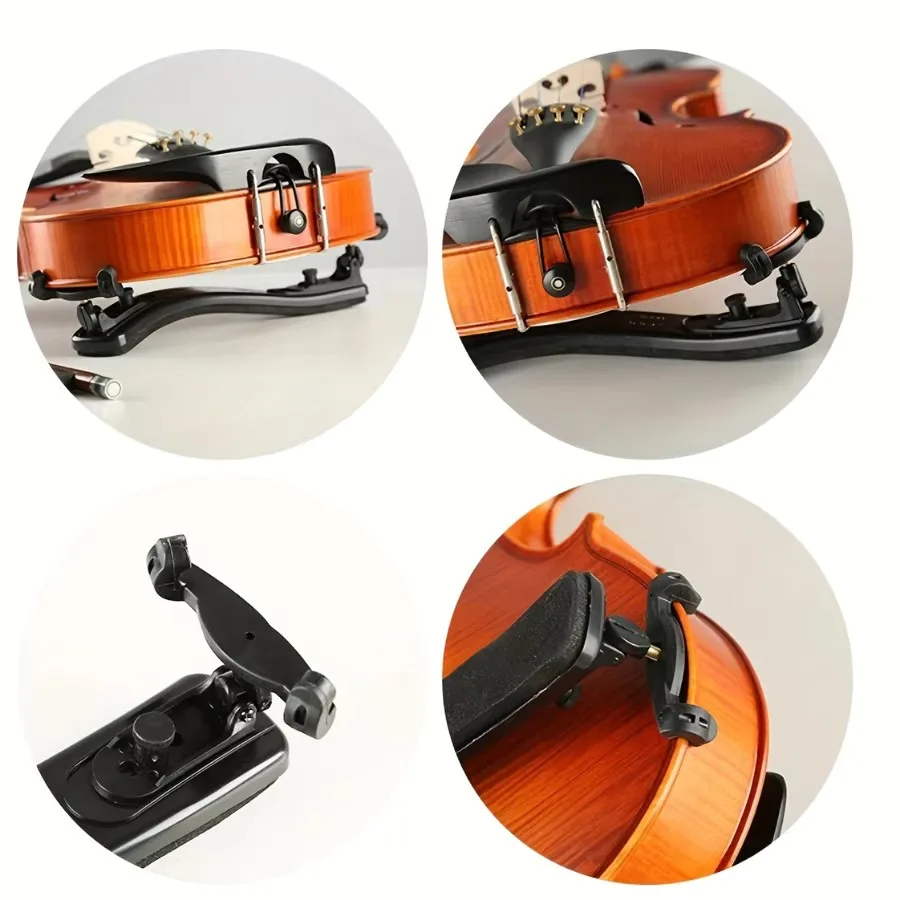
A clip-on rest grips the edges of the lower bout, and that grip is what keeps it steady while you play. It is meant to be there for a practice session. Left on inside a closed case, two things stack up: the feet keep their pressure on the ribs continuously instead of for an hour, and the lid adds pressure from the other side, so the instrument is held between the two rather than lying free in its bed.
The second effect is the one people notice, because it is loud. A case that has to be pressed shut, or that bulges at the latches, is telling you the geometry is wrong. The first is silent and cumulative.
Taking the rest off costs a few seconds and gives something back. The thumbscrew joints hold whatever angle you set, so folding the feet in does not lose your setting: unfold them and the span and tilt are where you left them. Height decides whether a rest helps or hinders, and rebuilding it every morning is how players drift too tall.
raising shoulder-rest height increased violin fixation force and shoulder muscle activity, and players reported lower comfort
The packing routine
Same order every time, and it takes about as long as reading it.
- Unclip the rest. Shorter foot off the rib first, then the long concave end, the reverse of the way it went on. Never lever it off from the middle of the arch.
- Fold the feet in. They pivot against the body of the rest and the whole thing goes flat.
- Wipe the strings and the belly. Rosin dust is what dulls varnish.
- Lay the violin in its bed. Neck in the channel, body on the padding, nothing underneath it.
- Put the rest in its compartment. Flat, lid down, before the blanket goes over the instrument.
- Loosen and stow the bow. Its own holder, on its own.
- Close the case without pressing. If it needs a push, something is in the wrong place.
Step seven is the whole article in one line. A case that closes under its own weight is packed correctly, and the shoulder rest is the object most likely to be why it does not.
Keep reading: how to fit the rest, how to hold the violin and bow, whether a young beginner should start with one, the buyer's guide, and real buyer reviews. Or shop the adjustable Cadenza rest in both sizes.
Questions
Where does a shoulder rest go in a violin case?
Beside the instrument, never under it and never on top of it. First choice is the lidded accessory compartment next to the tailpiece. If yours is full or absent, the empty well beside the neck and scroll takes a folded rest, and most case covers have a zipped outer pocket.
Can a shoulder rest go in the bow compartment?
Not against the bow. A bow held in spinners or clips sits in the lid, and a loose object sharing that space can press on the stick or the hair once the case is closed. Keep the rest on the body side of the case.
What should you never put on top of a violin in its case?
Anything at all. The top plate is arched and thin, and the bridge stands on it held by string tension alone, so it is the tallest and least protected point in the case. A rest, a tuner, a rosin cake or folded music all put their load through the arching.
Why will my case lid not close with the shoulder rest fitted?
A shaped case is moulded around the depth of the violin plus its chin rest, and a fitted rest adds a second protrusion on the opposite face. Our arch stands 4.4 cm clear of the back, and closing the lid onto that stack presses the instrument against the interior instead of letting it lie free.
Free shipping · 30-day money-back guarantee